

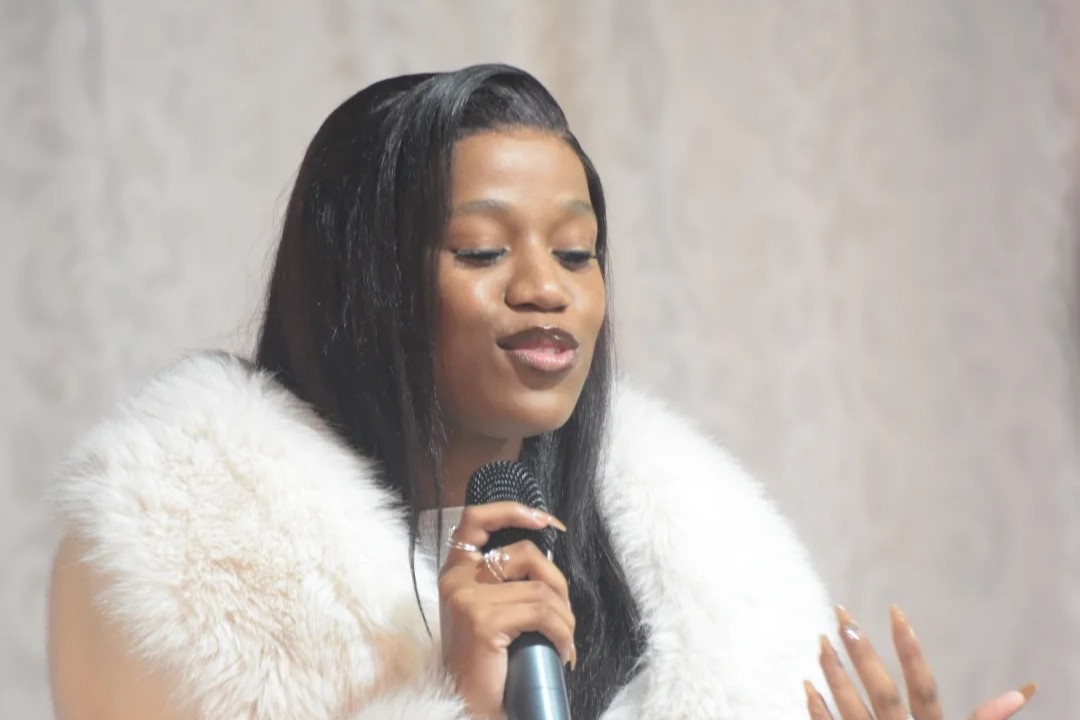
Nontokozo Hlatshwayo has opened up about the unusual and deeply personal way some of her songs come to life, revealing that inspiration can arrive before she has even fully started her day. For the gospel singer, songwriting does not always begin with sitting down and deliberately searching for an idea. She sometimes goes to sleep without a song in mind and wakes up singing a melody that has seemingly appeared overnight. Hlatshwayo believes these moments are connected to God, describing an experience that she does not always fully understand herself. Her approach offers an insight into the personal process behind the worship music she creates and how spontaneous inspiration can become the starting point for a finished song.
Speaking about her songwriting process, Hlatshwayo explained that she sometimes wakes up with a complete melody already playing in her mind. On other occasions, she finds herself singing a song immediately after waking, even though she does not remember deliberately creating it before going to sleep. “I sleep, and then I wake up with a song. Sometimes I just wake up singing a song,” she explained. Rather than treating these moments as ordinary ideas that can be remembered later, she makes an effort to capture them while they are still fresh. Hlatshwayo attributes the experience to God, making her songwriting process closely connected to her faith and personal spiritual life.
Once a melody comes to her, Hlatshwayo uses her phone to record it so that she does not lose the original idea. She also keeps a book where she writes down lyrical thoughts that may eventually become part of a song. This practical habit allows her to preserve ideas even when she is not ready to turn them into complete compositions. Capturing the melody immediately becomes particularly important because spontaneous musical ideas can easily disappear when a person becomes distracted by the demands of the day. By recording and writing everything down, Hlatshwayo creates a collection of musical and lyrical ideas that she can return to when the right moment comes.
Not every melody or lyrical idea becomes a finished song immediately, however. Hlatshwayo acknowledged that there are times when she does not have the energy to develop an idea as soon as it comes to her. Some melodies and words therefore remain in her recordings or notebook until she feels ready to return to them. This part of her process shows that songwriting can involve patience as well as inspiration, particularly when the initial idea arrives unexpectedly. Instead of forcing every idea into a finished song, she allows some of them to wait until she has the energy and creative space to develop them properly.
The process also shows how reflection plays an important role in Hlatshwayo’s songwriting. While she often receives the melody first, she explained that the words usually come later through moments of reflection and connection with God. “Most of the time I don’t get words. I get the melody, most of the time. And then those words come from those reflections,” she said. This means the melody provides the initial foundation while her thoughts and experiences help shape the message that eventually accompanies it. For an artist whose music is rooted in worship, this process allows the lyrical content to develop alongside her personal reflections and spiritual experiences.
Hlatshwayo’s approach also demonstrates how songwriting can take different forms for different artists. Rather than beginning with a written lyric or a planned musical structure, her process often starts with an unexpected melody that she feels compelled to preserve. The development of that idea then happens over time as she reflects on the message and searches for the right words. Her phone recordings and handwritten notes become important tools in moving those early ideas towards completed songs. The process combines spontaneous inspiration with deliberate creative work, showing that a song can begin unexpectedly but still require time, thought and effort before it reaches its final form.
For Hlatshwayo, the connection between music, reflection and faith remains central to the way she creates. Her explanation of waking up with melodies offers listeners a glimpse into the personal experiences that can influence her worship music. The fact that she records these ideas and returns to them later also shows the importance of protecting creative inspiration when it appears. Although not every idea immediately develops into a complete song, the melodies and lyrics she preserves can provide material for future musical projects. Her songwriting journey ultimately begins with listening, capturing spontaneous ideas and allowing reflection to shape them into worship songs with meaning and purpose.
Join ' SA Gospel Music' WhatsApp Channel
Get the latest Gospel Music news delivered straight to your WhatsApp
CLICK HERE TO JOIN